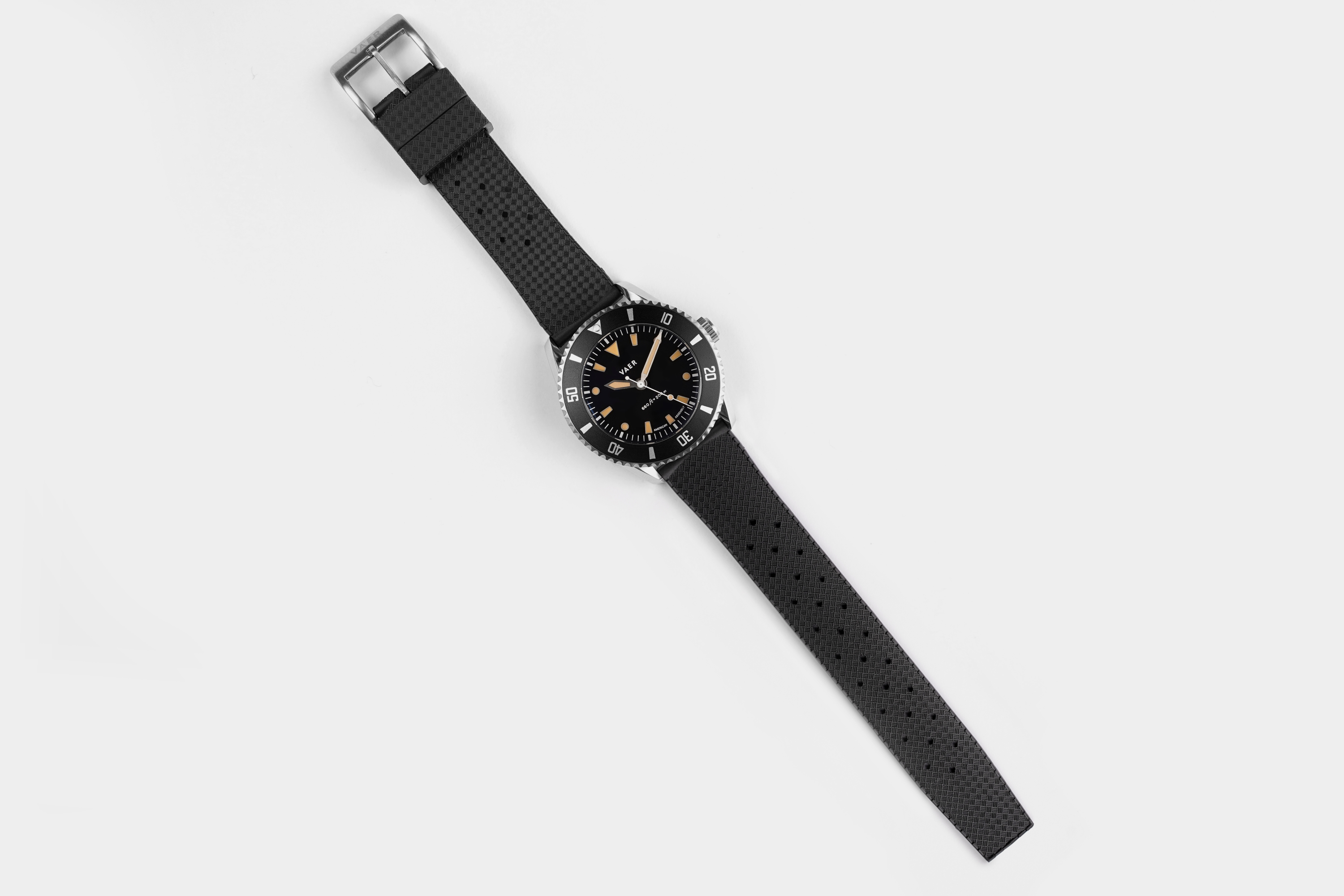



FKM stands for Fluoroelastomer, which is a class of man-made rubber of great density but soft in touch, made to stand harsh conditions, such as high temperature and resistance to chemicals.
This type of rubber is often used in aerospace and nautical industries, which speaks a lot about its quality. To name a few, some of the characteristics of this material are: excellent resistance to chemicals (oxidation, acids, fuels), astonishing temperature durability (from - 60°C to 225°C ), great stability in all weather conditions, long-lasting etc. The material is first developed by American company DuPont, under the brand name Viton®.
The same company developed Neoprene™, which became so popular that it became the common name for polychloroprene. The same often happens with Viton. Nowadays, there are many other producers of this valuable material. There are also variations of FKM, based on the polymers used. The higher the fluorine content, the material is more resistant.
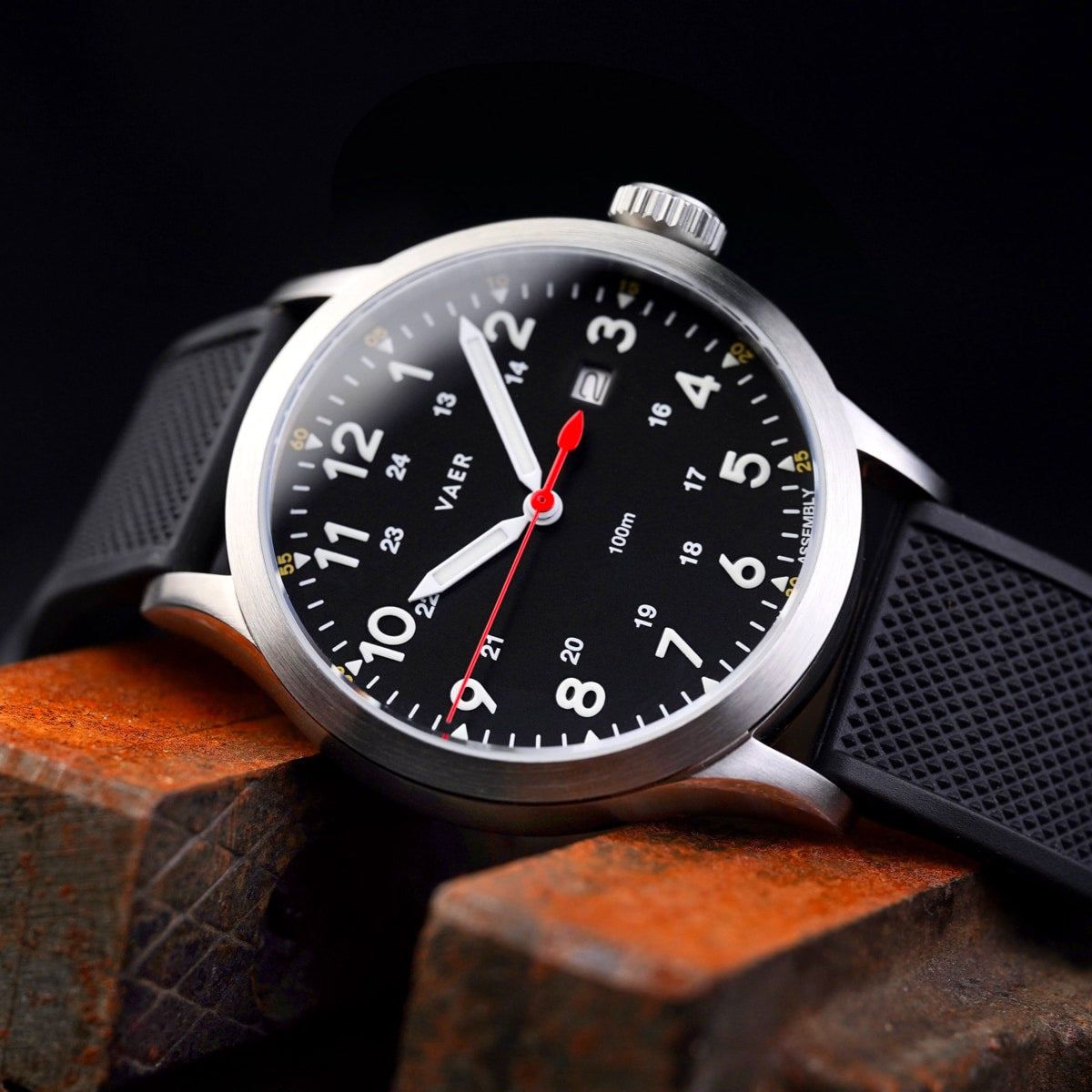
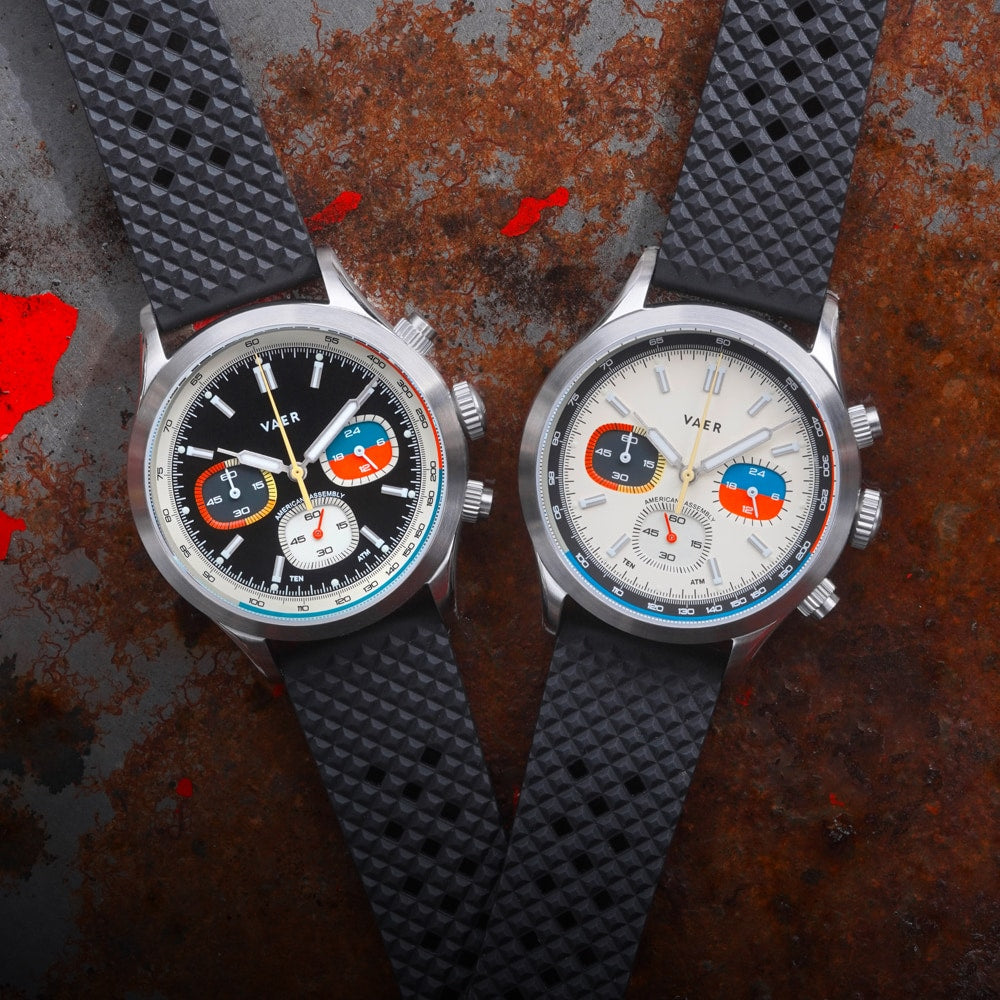
If you compare FKM and vulcanized rubber, FKM is like the superhero, synthesized cousin to the latter. Vulcanized rubber is made by mixing natural rubber with additives (such as sulfur) in the process called vulcanization, which makes the material stronger and more flexible. Vulcanized rubber has a wide field of application and therefore it’s considered a commercial grade rubber. Watch straps made from rubber became popular in the 20th century because they don’t conduct electricity, they’re waterproof, great for outdoor or adventure use because of UV resistance, easy to clean, and cause less allergies than metal watch bracelets. FKM added excellent durability and resistance in harsh conditions on top of all that, as for example, temperature, where ordinary rubber couldn’t stand a test due to low melting point. It’s quite obvious who the winner is in the FKM vs vulcanized rubber’ match.